

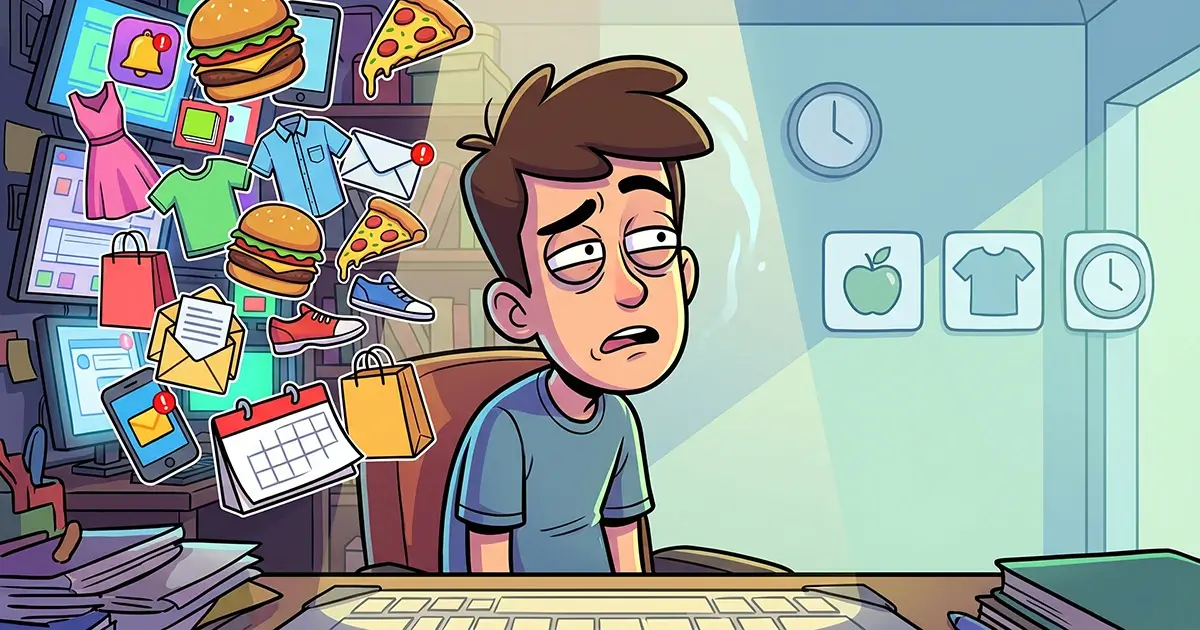
Decision fatigue is a psychological condition where the quality of your decisions deteriorates after making too many choices. In simple terms, your brain gets tired of deciding. Just like muscles get exhausted after exercise, your mental energy also has limits. Every small decision, from what to wear to what email to reply to, consumes cognitive resources.
Over time, as these choices pile up throughout the day, your ability to make clear, rational decisions decreases. This can lead to procrastination, impulsive decisions, or avoiding decisions altogether.
In psychology, decision fatigue is closely linked to cognitive load theory, which explains how working memory can only handle a limited amount of information at once. When that limit is exceeded, mental performance starts to drop.
How Decision Fatigue Affects Your Daily Life
Decision fatigue doesn’t just affect big life choices. It shows up in small everyday moments that seem unrelated at first.
You might feel mentally drained by the afternoon, struggle to pick simple options like meals or clothes, or delay important tasks because your brain feels “full.” This is not laziness. It is mental depletion caused by continuous decision-making.
As the day progresses, your brain shifts from careful thinking to shortcuts. These shortcuts may lead to poor choices like impulse shopping, unhealthy food decisions, or avoiding responsibilities altogether.
Example 1: The Endless Digital Choices Trap

In today’s digital world, even scrolling is a decision-heavy activity. Think about opening a streaming platform or social media app. You are instantly faced with hundreds of options: videos, posts, reels, or articles.
At first, it feels entertaining. But after a while, choosing what to watch becomes stressful. You scroll endlessly, unable to commit to a single option. Eventually, you either pick something randomly or close the app without watching anything.
This is decision fatigue in action. The abundance of choices overwhelms your brain, leading to mental exhaustion instead of relaxation.
Example 2: Workplace Decision Overload

In professional environments, decision fatigue is extremely common. A manager or employee may start their morning making high-stakes decisions like planning projects or approving strategies.
As the day continues, they are bombarded with emails, meetings, and minor decisions like approvals or replies. By the afternoon, even a simple yes or no question can feel overwhelming.
This leads to delayed responses, reduced productivity, and sometimes poor judgment calls. Many workplace mistakes happen not due to lack of skill but due to mental exhaustion from continuous decision-making.
Example 3: The Grocery Store Paralysis Effect

Have you ever gone shopping for something simple like cereal or snacks and ended up feeling confused by too many options?
This is a classic example of decision fatigue. When faced with too many similar choices, your brain struggles to evaluate differences. Instead of feeling empowered, you feel stuck.
You may compare labels, prices, ingredients, and brands, but eventually give up and either buy nothing or pick something randomly without confidence.
This “choice overload” shows how even small daily tasks can become mentally draining when too many options are present.
Example 4: Social Pressure and Everyday Life Choices

Another subtle form of decision fatigue appears in social situations. For example, choosing what to wear, how to respond in conversations, or deciding how to behave in different environments.
People often underestimate how many micro-decisions are made in social settings. Should I reply now or later? Should I speak up or stay quiet? Should I attend this event or rest?
Over time, these constant judgments create mental exhaustion. This can lead to withdrawal, irritability, or avoidance of social interactions simply because the brain wants fewer decisions to make.
How to Reduce Decision Fatigue
The good news is that decision fatigue can be managed with simple strategies.
- One effective method is reducing unnecessary choices in your daily routine. For example, planning outfits, meals, or tasks in advance reduces mental load.
- Another strategy is creating routines. When certain decisions become automatic, your brain saves energy for more important tasks.
- You can also use prioritization techniques like the “rule of 2,” where you limit options to just two choices instead of overwhelming yourself with many.
- Finally, making important decisions earlier in the day when your mental energy is fresh can significantly improve outcomes.
FAQs
What causes decision fatigue?
Decision fatigue is caused by making too many choices in a short period of time, which drains mental energy and reduces decision-making quality.
Is decision fatigue a medical condition?
No, it is not a medical disorder. It is a psychological phenomenon related to cognitive overload and mental exhaustion.
Who is most affected by decision fatigue?
People who make frequent decisions daily, such as managers, entrepreneurs, students, and even heavy social media users, are more prone to it.
How do I know if I have decision fatigue?
Common signs include feeling mentally drained, avoiding decisions, procrastination, impulsive choices, and difficulty focusing on simple tasks.
Can decision fatigue be prevented?
Yes, by reducing unnecessary choices, building routines, planning ahead, and simplifying daily decisions, you can significantly reduce its impact.


Comments (0)
No comments yet. Be the first to share your thoughts!
Leave a comment
Your comment will appear after it's reviewed. Your email is never shown publicly.